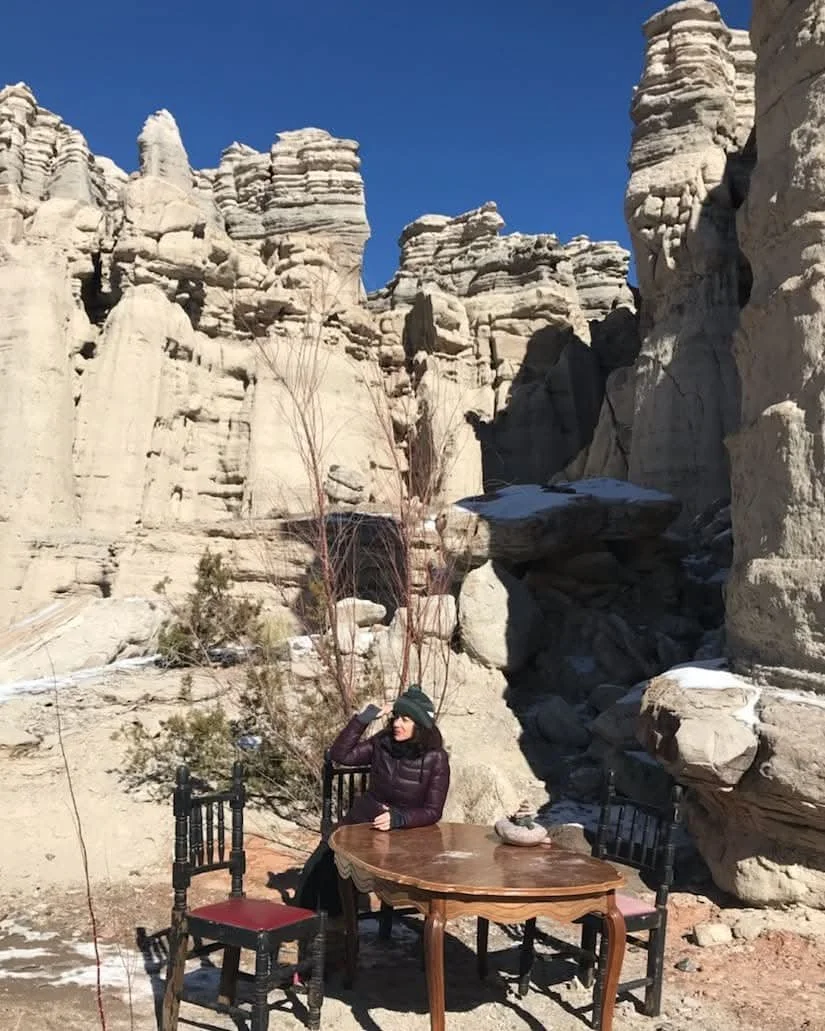
Biography | Samantha M. Eckert was born in Glen Cove, NY, and raised in Brownsville, VT. Eckert holds an MFA from Vermont College of Fine Arts, Montpelier, VT; a Certification in Museum Studies from the Institute of American Indian Arts, Santa Fe, NM; and a bachelor’s degree from Vermont College of Norwich University, Montpelier, VT. Eckert maintains a multidisciplinary art practice that fosters ongoing inquiry into interwoven relationships, where material experimentation, personal reflection, political realities, and spiritual questions coexist, collide, and continually shape one another.
In 2025, she was awarded a grant from the Vermont Arts Council, received the James Bernard Haggarty Scholarship, and enrolled in the NYC Crit Club Canopy Program, mentored by Sharon Butler (Two Coats of Paint). Eckert has attended several artist residencies, including the Vermont Studio Center, Johnson, VT; La Macina di San Cresci, Greve, Chianti, Italy; and she was a two-time artist in residence at The Studios at MASS MoCA, North Adams, MA.
Her recent solo exhibition Wandering in Hope (2026), was featured at the Nuquist Gallery, T.W. Wood Museum, in Vermont's state capital Montpelier, VT, received attention in local publications. Eckert has exhibited in MA, NH, NM, NY, VT, and Italy. She lives in Randolph, VT, and works as the Curator and Exhibition Manager at AVA Gallery and Art Center, Lebanon, NH.
Artist Statement | Chance, risk, and disasters are essential to my process. Bad paintings are opportunities, providing a history and a fresh start. Since I was a kid I've built imaginary portals and worm holes; tree forts, snow caves, and cardboard cities, used to step into an otherworldly realm. I'm still interested in exploring what's in between and fascinated by teetering and the uncanny; where something is becoming and the feeling is akin to hovering. These layered grid paintings act as a threshold or an escape hatch from the scroll and feed and the feeling of being small inside something vast and indifferent. I'm always straddling memory, the moment, and an afterwards.